Showing posts with label Velo Routier V2. Show all posts

Friday, March 24, 2023

Sub Compact

The front derailleur on my current road bike has been a problem since I got it. If you want the whole story, you can read it here: https://mondoblahblah.blogspot.com/2018/04/all-together-now.html

The microSHIFT derailleur supplied with the Cycles Toussaint Velo Routier v2 DIY build kit was just never quite right. It worked, but in order to shift to the large chainring I had to "overshift" so that the outer plate rubbed the inside of the crank arm and then trim the derailleur back once the chain made the move to the big ring. 

The crank arm didn't completely come to a stop when it made contact with the derailleur cage, but to avoid as much "rubbing" as I could, I tried to shift up only after the drive-side pedal passed the 12 o'clock position and have all trimming complete before it reached the 9 o'clock spot. Obviously harder when pedaling at a high cadence.

I got used to the motion, so it wasn't a huge problem. Since I spend about 95% of my time on the big 46 tooth ring, it wasn't much more than a minor annoyance. But the derailleur never actually worked the way it's supposed to, and it spent far more time rubbing on the crank arm than should ever be the case. We do it all the time, but we should never have to conform our behavior to compensate for the inadequacy of our equipment. We deserve to have stuff that works!

microSHIFT 9/10-speed front derailleur

These "winter months" tend to be when I attend to the routine maintenance of my bikes in preparation for the much more active spring riding season. This year I needed to re-wrap the handlebars and while I was doing that I thought I'd try a different cable routing for my bar-end shifters, running the cables under the bar wrap rather than having the big swoopy loops of cable housing jutting out over the front wheel where is kind of interferes with my rack-mounted handlebar bag. AND while I was at THAT, I might just as well see if I could do something about the annoying front derailleur.

After removing the microShift unit, I immediately noticed two things about it:  

  1. The model number does not match that listed on the Cycles Toussaint site (FD-R62 vs. FD-R74E)
  2. It is marked "9/10 Flat Handlebar"

microSHIFT FD-R62 9/10-speed front derailleur

I honestly have no idea if either of these things matter at all. They are both old, retired parts numbers and I'm not sufficiently interested to know if there was a mistake in my order. At this point I could probably just live with it forever, gripe from time to time and just get on with my life. But I have an Ultegra derailleur gathering dust so...  

I had recently run into the old Microsoft Ultegra 10-speed front derailleur in my parts bin. It's a remnant of my midlife crisis super bike, and it's just been sitting in the bin since I stupidly drove into a parking garage with it bolted to my roof rack. 

Now I am not sophisticated about chain lines, spindle length, etc. I used to believe that Shimano components won't work with anything other than other Shimano components, and even then only from the same groupset from the same generation. But I have recently come to believe that friction shifting can cure nearly all technical problems with bikes (thanks Russ!). So I figured I'd swap the Ultegra for the microSHIFT and see if it works any better. In the worst case I'd just have to swap them back, so what's to lose?

Shimano Ultegra 10-speed front derailleur

You probably won't be surprised to learn that of course the Shimano derailleur works better. At least it is easier to adjust so that the chain moves to the big ring without the derailleur rubbing on the crank arm. And it shifts down just as reliably. Altogether it just provides a much more confidence inspiring shifting experience. It does seem to take more "trimming" when I'm cross chaining. I think the Ultegra cage, which is specifically 10-speed only, not 9/10-speed, is narrower than the microSHIFT's, which would account for the difference. Saint Sheldon confirms. 

I suspect I'll spend more time trimming at the outside edges of the shifting range, and I'll see if that drives me crazy. For the moment, it's just nice to be able to pull up to the big ring in a single motion without having to think about where the crank arm is in its rotation 

So the moral of the story is that you should never leave an expensive Shimano component lying around in a box when you have an equivalent budget part you aren't happy with. Slap it on, see if it works. What have you got to lose?

Sunday, April 3, 2022

Crustier and Crusteür

Crust Lightning Bolt Canti
The new Lightning Bolt has arrived!
Some of you will know that I recently purchased a new Crust Lightning Bolt Canti frame. The main reason I bought it was the glowing review in Bicycle Quarterly. They basically said the bike nearly equaled the performance of the bespoke, custom bikes they ride, at a fraction of the cost. Having spent the past few years happily riding a Cycles Toussaint Vélo Routier, a budget variant on the same theme, i.e., a low trail, 650b rando bike, I was intrigued. I went on about my hopes for the bike in the previous post, and will provide details about the eventual build and impressions of the bike in future posts, but today I thought I'd assemble a list of links to other people's conversations around both Crust, the company, and the Lightning Bolt. Most of these resources refer to models prior to the 2022 version, but I think they're still relevant, or at least interesting to me. So, without further ado...

Path Less Pedaled
https://youtu.be/nEDra8YR8-s?t=261
"It's basically Bicycle Quarterly. Shake Bicycle Quarterly, this fell out of the pages." Matt  https://youtu.be/q5eJzXVzKFg
https://youtu.be/vYneDSM9JTY

The Radavist
https://theradavist.com/2019/09/ultra-romances-crust-lightning-bolt-is-lighter-than-a-soft-whisper/
https://theradavist.com/2020/03/nams-crust-bikes-cantibolt-lightning-bolt-thrower/
https://theradavist.com/2021/05/readers-rides-tins-crust-bikes-canti-lightning-bolt-in-central-florida/

Blue Lug Crust Videos (Japanese - turn on CC for enjoyably awkward subtitles)
https://youtu.be/LHuGZOdRArs
https://youtu.be/upoTnEgiFaY
https://youtu.be/-Wcca6XwTX0 

How Centaur/Mermaids say, "I love you"

Friday, March 25, 2022

Crustaceous sky fire

There's an entire hemisphere of my brain that can't believe I bought a Crust Cantilever Lightning Bolt. It's the side that drew me to graphic design with an emphasis on the written word. The hemisphere that makes me a font-weeny that pours over The Elements of Typographic Style, and have opinions about the differences between Helvetica and Arial. Christ, I obsess over typefaces even when writing utterly unimportant documents. Note for the Amazon guy to leave a package on the porch? Definitely Garamond. So how on earth did I end up with a bike whose model name is rendered in some kind of faux graffiti-esque face?

Crust Lightning Bolt Canti

And don't even get me started on the brand's pink Rocky Horror Picture Show typeface, book-ended by literal lightning bolt clip art and South Beach pastel colored banding. Dear Kröd.

Crust brand name in pink "grunge" typeface

Is it supposed to be some kind of skate punk thing? Homage to BMX? Don't get me wrong. I've been known to defend even the much despised Comic Sans typeface. Horrid in most places, but perfectly appropriate in a comic strip. Likewise the Lightning Bolt's type/iconography. It would sort of make sense on a skateboard or some of the brand's other models - the bikes that look like you'd naturally see them popping above the coping of an empty swimming pool. The Scapegoat maybe? Dude. Brah. Radical.

But on this bike? The Lightning Bolt's frame is a modeled on Jan Heine's classic French Réne Herse Randonneuse. Not exactly the heritage you'd expect from this typographic styling. All I can imagine is that the Crust guys came up with the name Lightning Bolt because they expected this lightweight to be fast, and the rest just followed from that. What a shame. But look, a bike designer gets to choose whatever graphics they want on their bike. I get it. If this is an expression of Crust's sensibility, why should they care what I think? Buy the bike or don't, pops. 

So given all that, what was I thinking? How could I bring myself to plunk down so much cash for a bike that irritates me every time I look at it? Well, it's precisely because it seems to be such a GREAT copy of that 1952 Réne Herse that I could not resist. Matt is obviously seriously into bikes. You'd have to be to think it's a good idea to get into such a crazy industry. And as a dedicated non-competitive, Path Less Pedaled, "Supple Life" type disciple of Bicycle Quarterly, he built a super-light, thin-walled, low trail, 650b Rando bike. But he did it his way. And his way, if the packing tape on the box in which the Lightning Bolt was shipped is any indication, is a bit zany. Tropic punk? Psychedelic metal? Nerdcore?

Will Ferrell in Wedding Crashers w/ Crust logo on forehead

Crust's packing tape expresses their sense of humor

So, who am I to judge? You want the bike or not? Okay, yes. I want it. By the time it became available, I wanted it a lot. Maybe the result of perceived scarcity following the long wait associated with the pandemic supply chain issues of the past two years. Maybe the pre-sale note saying, "things are looking a bit dicey for Crust". Maybe just N+1 syndrome. Maybe the return to a horizontal top tube, combined with the sparkly black "Galaxy" paint job that got me. Probably all of the above. But in the end, it is the prospect of the bike itself that forced my hand. 

Cycles Toussaint Vélo Routier, Version 2

You may recall that in Spring of 2018 I bought a Cycles Toussaint Vélo Routier. Like the Lightning Bolt, it is a Taiwanese, low-trail, 605b bike. It is, by its makers' own admission, an "entry level" bike, though I think that is so only in the sense that the components that came in the DIY build kit were entry level. The frame and fork have a couple of unique and glorious design elements that set the bike above and beyond every other production bike in it's category, the most striking of which is that it was spec'd for direct-mount, long reach, center-pull brakes. Unheard of. Even the tubing chosen for the Vélo Routier was as light as made sense for a production bike, using "oversize" (1 1/8") 4130 Cro-moly steel in .8/.5/.8. Honestly this a bike that could only have been built by a fanatic who didn't need the money. 

But Taiwanese builders are used to building mass production bikes to safety standards that assure they won't get sued, so that "light" steel, roughly equivalent to Reynolds 531, is still stiffer than the .7.4.7 Jan recommends for bikes that "plane". You want that kind of steel in a production frame, you gotta sign a waiver. Legend is, Matt Whitehead is just crazy enough to sign such a waiver, and spec a fork that is much more slender than the one on the VR. Word is the Lightning Bolt is basically the same spec as Jan Heine's Mule. Whatever the case, the Lightning Bolt frame and fork weigh about 180 grams less, over half of which (93 grams) is in the fork. 

The other, perhaps more significant difference between the Vélo Routier and the Lightning Bolt is in the geometry. Though Bike Insights shows a calculated trail for the VR at a ridiculously low 18.8mm, Cycles Toussaint themselves claim 30mm. I'll give them the benefit of the doubt. But even the 30mm is very low by conventional standards. The Lightning Bolt comes in at 40.2mm (for the 42mm tires I plan to ride). The Lightning Bolt's wheelbase is a bit shorter, as is its chainstay. The bottom bracket is also a bit higher on the Crust. In theory, all of these very minor differences should yield a bike that is quite similar to my old one, but with possibly a little less "twitchy" feeling due to the higher trail. But other elements can have an effect too, like handlebar width, crank and stem length. I haven't gotten the build worked out yet - the frame was a bit of an impulse buy, so I haven't thought through the components yet. Any way you cut it, I expect the differences to be subtle. Time will tell.

Crust sticker included in the box in which the bike shipped!

Lastly, there are a couple of elements floating around in my brain. First, there is still no brake attachment on the chainstay bridge. Not a deal-breaker by any means, and it probably saves weight - but they are elegant for any center-pull brake set-up, and the original prototype had them, so I can't help but be a bit disappointed. BUT, and I shouldn't be so excited about this, the Lightning Bolt has vertical rear dropouts. Now this is just about the most persnickety little thing, but the Vélo Routier has horizontal dropouts. Not a huge deal, but it caused me a lot of trouble early on, requiring me to purchase internal cam quick-release skewers, and it makes changing a rear tire difficult when the bike has fenders.Again, not the worst thing in the world, but I'm genuinely happy to see the more typical dropouts on the Crust.

Okay, enough for now. I'll post more as I start to think about the build. It's my intention to use a few parts from the ol' Parts Bin, mixed with some new "dream bike" parts that I'll have to save up for. Stay tuned.

...like you’re the star of the Brevet, leading everyone into a marshmallow and ice cream victory meal.

Wednesday, September 8, 2021

Ag-ventures in gravel

A ride through Montgomery County's Agricultural Reserve

The weather was wonderful over the holiday weekend, so I managed to get out for a 70 miler through Montgomery County, Maryland's Agricultural Reserve to the currently closed White's Ferry on Saturday. There's a short stretch of gravel on River Road between White's and Edwards ferries through several sections of forest and farmland. And then I managed a delightful 50 miler out to Olney with the Managing Partner on Monday. Absolutely wonderful. Any time I can get in 120 miles with over 5,000 feet of climbing is a good weekend. 

Thursday, August 12, 2021

The Lighten-ing: Seatpost

I recently described the upgrade to the set of wheels on my Cycles Toussaint Vélo Routier v2, a low-trail, 650b bike. Not that you care, but you can read it here: https://mondoblahblah.blogspot.com/2021/07/the-lighten-ing-wheels.html

There are a few other upgrades I've been meaning to make, foremost among them, a new seat post. There was nothing inherently wrong with the Kalloy seatpost that came with the Velo Routier DIY package. It is a simple, classic-looking seatpost that fits this bike perfectly. But there was a minor (hopefully just cosmetic) manufacturing defect that has always bugged me a bit. At the rear of the post there was a tiny "dot" of adhesive foil stuck on for no apparent reason. One day I mindlessly started picking at it, as one might a scab, and once pealed off, it revealed a hole in the post, an obvious defect in from the casting of the aluminum. What have we here?! I exclaimed.

Kalloy seat post with foil concealing the manufacturing defect


Kalloy seat post from Cycles Toussaint

Too lazy to make a fuss over a $19 seatpost, and presuming the defect doesn't constitute a high risk of failure, I left it. If that's the bike's biggest problem, I'm certainly happy to live with it. And did. For a long time. But then the binder bolt on the Managing Partner's fancy-schmancy carbon fibre Specialized seatpost snapped off. 

Well, as you may imagine, while purchasing a new seat post for her, I couldn't resist the temptation to slip an extra into the ol' René Herse Cycles shopping basket. So it is that the Vélo Routier has come to sport what I think is one of the nicest looking seatposts available, the S65.

Nitto S65 "Crystal Fellow" seatpost

Nitto S65 "Crystal Fellow" seatpost - profile view

Nitto S65 "Crystal Fellow" seatpost - saddle cut-out view!

Nitto S65 "Crystal Fellow" seatpost - box

Now I am plum jiggered if I know why it's called "Crystal Fellow". Sounds like a sex toy. But as the box says, it is forged alloy pillar seatpost made in Tokyo, Japan. The Managing Partner's bike is a teeny-tiny "compact" frame, so she needed the 300mm version, while my Vélo Routier shows only the traditional "fist-full of post" so I got the 250mm. It's the same length as the original Kalloy post. So, of course I had to weigh them!

The Kalloy seatpost weighs 261 grams

The Nitto S65 "Crystal Fellow" seatpost in 250 saves 10 grams!

In addition to being marginally lighter (c'mon, ten grams?!) the Nitto is forged, which I presume means it is stronger than the obviously cast (K)alloy post. I suspect this makes the point about weight: saving that 10 grams cost me about $86 with shipping. So, you know, about $9 per gram. Cheap by bicycle standards but given there was nothing functionally wrong with the original, a bit of an unnecessary extravagance to be sure. Nevertheless, I love Nitto products, want to encourage the company to keep making them, think the "Crystal Fellow" looks just a bit nicer and hey, 10 grams is ten grams, am I right?

Friday, July 2, 2021

The Lighten-ing: Wheels

For those of you who don't know, a few years ago I smashed up a midlife-crisis-carbon-fiber-super-bike and replaced it with a low trail do-it-yourself-built steel rando bike from Cycles Toussaint of Alberta, Calgary. Read all about it here: https://mondoblahblah.blogspot.com/search/label/VR2%20Build

I've swapped some cockpit parts over the years, but in general, the bike looks like this:

Cycles Toussaint Velo Routier V.2, 51cm

With the exception of the tires, handlebars, stem pedals and bottle cages, all parts came with the Cycles Toussaint Velo Routier DIY package. Though I could never quite get the front derailleur adjusted perfectly, I've been extremely happy with the bike, and find I like it more the longer I own it.

People who ride bikes like this, absolutely should not be weight weenies. The frame is steel, the rims are metal, the tires are wide. This bike is designed and built to keep the rider comfortable over long distances, not to race. So it's heavy compared to the bike it replaced. Ready to ride it weighs just about 32.6 pounds as I originally set it up. 

For a while I have been thinking of getting a second set of wheels. Nothing particularly wrong with the original set, and the kid at the local bike shop even complemented me on them when I took them in to get trued (I can do a basic job, but I like to periodically take them in to a professional get the dish and spoke tension right). My first inclination was to order a new set from Cycles Toussaint, as they have a wheelset for sale for the insanely low price of $169. The set, like most of their components, runs a tad heavy at nearly 1,900 grams, plus another 100g or so for quick releases. 

I had heard Russ Roca from PathLessPedaled mention he thought "good" wheels should generally not exceed around 1,500 grams, so I thought I'd look around to see what my options were. It doesn't take long to discover there aren't a lot of good options for 650b alloy "box" style rims on the market. In fact, aside from those available through Cycles Toussaint, only Pacenti seems to offer pre-built wheels that fit the bill. Velo Orange used to offer a nice set, but I haven't seen them actually in stock for a number of years and they seem to have been captured by the disk brake tractor beam. Of course I probably should (and thought I might) break down and get a set built at the shop, but that would require more effort than just plunking down my credit card, dammit!

After reading Jan Heine's description of the wheels he built for the bike he rode during the 2019 Paris-Brest-Paris ride, I decided the Pacenti Brevet 650b was close enough and somehow ordered during a brief window of availability during the Covid-19 pandemic. Looking at their site, it looks like there's now a backlog of at least 10 weeks, as is the case with a lot of products these days.

Pacenti Brevet 650b wheels

Built just for me by someone named Ryan from Devon, UK!

Ryan from Devon built my wheels with their own two hands.

Fortunately, before the end of the world, I acquired a back-up set of tubes and Loup Loup Pass 650b x 38mm extra light tires from what was then still Compass Bicycles, now René Herse.

Compass Cycles Loup Loup Pass tires and Schwalbe SV21A tubes

I've only used two models of tires on this bike in the three or so years since I bought it - the white Pacenti Pari-Moto tires that came with the Cycles Toussaint DIY package, and the Compass Loup Loup Pass extra lights. Both are made by Panaracer in Japan, in what looks like nearly identical molds. Both are absolutely outstanding quality tires, the primary difference being lifespan - the Pari-Moto tires are what Jan Heine has described as "event" tires, and for me at least, were very short lived. But they performed every bit as well as the Loup Loups at about half the cost, so you decide. If you like the white, buy two sets and just swap them out twice as often.  

A note on tubes: The René Herse site recommends Schwalbe SV14A tubes for the 38mm tires. When I originally installed the Loup Loups, I did so with those tubes, and both of them blew out. I allow that there may have been a problem with my rim tape or something (though the tubes blew out on both front and rear rims), but having blown $34 to smithereens, I elected to get some SV21A tubes and haven't had a problem with them. 

Technically the SV14As are listed on the Schwalbe tube-finder as 26 inch tubes which Jan has pointed out are plenty big enough for 650b rims (there's only about 3% difference in circumference, which should be fine). The SV21A tubes, specifically rated for 650b rims are a touch heavier (just under 3 ounces). I'm willing to suffer the extra 80 grams for just a touch more confidence.

Schwalbe SV14A inner tube specifications

Schwalbe SV21A inner tube specifications

https://www.schwalbetires.com/bike_tires/tubes/finder

I was originally going to install a new MicroShift 10-speed cassette on the new wheels, but I figured while I was updating the wheels I might as well "upgrade" the cassette as well, at the risk of introducing yet another variable to complicate matters. So I installed a SRAM PG-1070, 11-36 cassette. Not sure it's superior in any way to the much less expensive Microshift alternative, but it saved about 2 ounces. I used one of the "extra" KMC 10-speed chains included with the DIY package. 
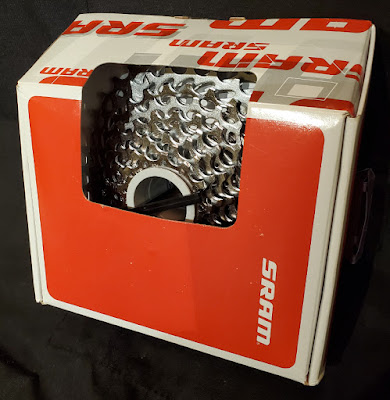
SRAM PG-100 Cassette

So I have the new Brevet wheels on the bike with new Loup Loup tires, Schwalb SV21A tubes, SRAM cassette and a KMC chain. Just in case you don't know, here's a Rivendell video demonstrating the process of swapping out the cassette and chain:

https://vimeo.com/505415805

So, does all this extra effort (and money - probably about $350 more for the "upgraded" wheels and cassette) yield any benefit? The simple answer: hell, yes. I can't say it's completely revolutionized the bike's performance - it's still piloted by a middle-age slacker after all - but there is a definitely a notable improvement to the ride quality. Spinning up to speed seems quicker, as does sprocket engagement after coasting. I'm not sure it's actually faster, but it feels faster and just somehow "smoother". 

I suspect a large portion of the improved ride quality has to do with the quality of the freehub, which is undoubtedly of better quality than the DIY hub. But weight might also play a role, particularly in the front which, despite having four (count 'em, 4!) fewer spokes, feels more "definite". I will test my freehub theory when I next swap out wheels. When ordering the Brevets I picked up a Pacenti freehub to get to the $500 free shipping limit. I'll put that on the stock Cycles Toussaint wheels with the MicroShift cassette and see how it compares. Of course that probably won't be for another year, so...

The conclusion is that I'm super happy I went this way. Nothing particularly wrong with the stock build; it is what it was supposed to be: entry-level. But the stock wheels really do a disservice to the bike. This one upgrade reveals the true quality of the frame with its compliant steel and uncommon geometry. When supported by higher quality components, the Velo Routier absolutely shines. I'm happier with the bike now than when I bought it.

Pacenti Cycles Brevet 650b wheels for rim brakes

Sunday, November 10, 2019

Weights and Measures

Rolling out the door, my awesome low trail, 650b steel bike weighs 32.6 pounds, according to my bathroom scale. That's with two full water bottles, spare tubes, tools, snacks and a rain jacket, should I need one. That is, ready to ride. That's almost 17 pounds heavier than my midlife crisis carbon fibre superbike. Okay, not true, because the 15 pound 9 ounce Project One didn't include pedals, bottle cages and bottles or a saddle that a human being could actually be comfortable on. Every Bontrager saddle I ever tested was an ass hatchet. Anyway, for the purposes of discussion, I'm content to give the racing bike extra weight weenie credit. So, let's just say 17 pound difference between the two bikes. In bicycle terms where even casual cyclists are willing to pay thousands of dollars to shave a few grams, that is absolutely huuuuuggge...

Autumn in Rock Creek
Today you can buy a really nice Asian-made carbon fiber racing bike that weighs around 20 pounds for well under $2,000 (US). I verified this today - Performance Bike is offering a Fuji 2019 SL 2.5 Competition Road Bike for $1,699. It's a 650 gram frame with a Shimano 105 groupset. If you spend $5,000 more, you can get that weight down to around fifteen pounds. You know, DuraAce, much lighter wheelset, etc.   

One of the lightest racing bikes available, the latest Specialized Tarmac costs $11,000 and weighs around 13.78lbs (6.25kg). That's without pedals, bottle cages, computer or tool bag. My bike, without all those things, weighs about 26 pounds or about 12 lbs more. It's "ready to ride" weight is higher because I choose to make it more practical with a handlebar bag to carry useful stuff so I don't have to stuff my pockets or do without.

My bike cost $1,350 plus an undetermined amount of labor, but I'll be generous and say my "inept" mechanic's rate, plus the $150 to ship the bike from Calgary brought the total cost to $2,000. So the $9,000 price difference, divided by the 12 pound weight difference runs about $750 per pound. I can only presume it's worth it, because Rock Creek Park is filled with high-end bikes like the Tarmac.

On July 4 of this year, I stepped on that same scale and the number that came up was 198+. For argument sake, let's call it 200 standard American pounds. So, as I rode my bike that day, the total package weighed in around 232 pounds. Heavyweight horsepower, indeed! Since that time I have lost a bit of body weight. The number on that scale this morning was 168.8 pounds. So on today's ride, the total package of man and machine comes to 201.4 pounds. Which is to say, I've lost just about the entire bike's weight from my body in the past four months or so. AND it is to say that walking out the door, the total package weighs over 13 pounds less than if I was riding the aforementioned carbon fiber wonder machine at my previous weight. ALL of which is to say, no matter how much you pay for a bike, you'll never shave 30 pounds.

There are a lot of reasons to buy an expensive, featherweight bike. You could want the latest in wind tunnel technology and carbon layup because Bicycling magazine told you you need it. You may watch a lot of bike racing on TV, pepper your speech with words like "roleur" and just want that "pro" aesthetic for yourself. You may have buddies with similar bikes, forcing you to keep up with the Joneses. You might have just turned 40 or 50 and find yourself, as I once did, in the throws of an irrational desire to feel young and fast and energetic. You may just be a dentist and have too much money. All good reasons. But unless you are already at your ideal weight, if you are spending over $5,000 for a bike because it's lighter, save your money. Get a cheaper bike and lay off the doughnuts, you fat bastard!

Monday, September 2, 2019

Quick Release

Yep, it was definitely the rear quick release that was driving me crazy. As I noted before, I took an OEM skewer from a defunct racing bike, put it in the rear wheel, and then waited to see what happened. After a couple hundred miles, it had become apparent that the problem was resolved, and conclusively proven that:
Honestly, just give me a set of vertical dropouts with some lovely lawyer lips, and I'll be happy.
Having diagnosed and resolved the issue, onto the next problem - a Bontrager Racing Lite quick release looks completely out of place on a classic, low trail 650 rando-style bike!

So off I went to find an appropriate looking quick release. Of course I turned to the mounting pile of discarded wheels lying in the corner of the garage. The only real candidate came from the original wheel that came with my first road racer, which had Matrix Aurora rims and Tiagra hubs. Presumably then, the skewers are Shimano Tiagra, though there's no branding to that effect. They just say Shimano. Anyhoo, the axle seems to be too thick to fit the new wheels. I thought "modern" road bike axles were universal (5 mm, right?), but apparently not. Or maybe it's bent or something. In any case, I couldn't get it in. So, off to the interweb in search of new quick releases that will be aesthetically compatible with my bike...!

As strange as it may seem, there aren't really a lot of aftermarket quick releases in classic silver. You can get affordable internal cam skewers in a Shimano 105 or Ultegra, but they only come in shades of SHIMANO branding and ever-so-cool black and gray colorways. This bike looks classic and timeless. I want components that look classic and timeless, i.e., shiny silver stuff (SSS). Amazon has some really cheap all-steel models that are marketed for use with stationary trainers, and I did try one of those, but it was super heavy and very clunky. So that's not gonna work.

After checking in at Rivendell, it occurred to me to have a look at the company that makes the wheelsets they sell - Velocity of Grand Rapids, USA. And there it was! A simple, sliver internal cam quick release that doesn't look stupid on a classic bike. Okay, the Star Trek typeface of their logo isn't particularly "classic" but I'm probably the only one who will ever notice. So hopefully this is another issue settled. 

Velocity Quick Release
Silver Velocity Quick Release Skewer - Nice shape, really.

For those of you weight weenies following along at home, here are the stats of the various alternatives I was working with:

- Original Equipment (Cycles Toussaint/Rimnet)(130 mm): 56 grams
- Velocity (130 mm): 59 grams
- Shimano Tiagra (130 mm): 63 grams
- Bontrager Race Lite (135 mm): 70 grams